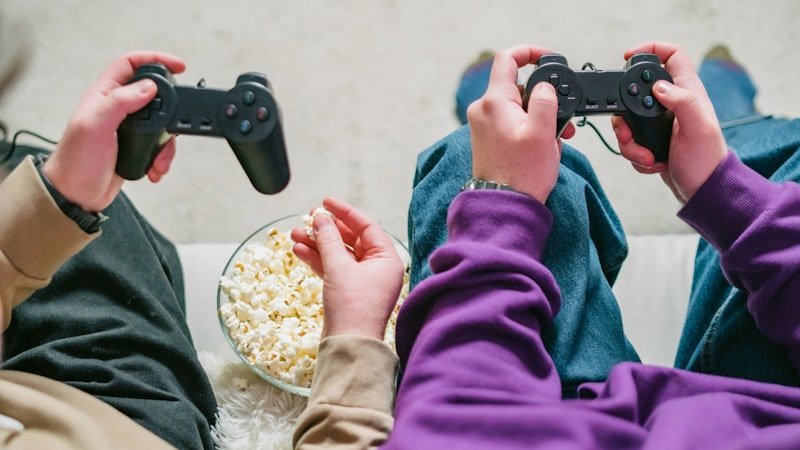
Picture it: a Friday night, circa 2003. Four controllers plugged into one console. A TV split into quarters, each section impossibly small but nobody caring. A bowl of chips serving as neutral territory. Arguments about screen-peeking. Victory dances that your friends had to witness in person.
That was couch co-op. And it's nearly extinct.
What Was Couch Co-Op?
For the uninitiated: couch co-op (short for cooperative) referred to multiplayer gaming where everyone was in the same physical room. Same couch. Same TV. Same snacks. You could see your opponents' reactions in real time — the grimace when they died, the celebration when they won, the shoulder punch when they blue-shelled you in Mario Kart.
The golden age ran from roughly 1996 to 2007. The games are legendary:
- GoldenEye 007 (N64) — The king of split-screen shooters. The "no Oddjob" house rule was universal law.
- Super Smash Bros. (N64/GameCube) — Four-player chaos that ended friendships and started new ones.
- Mario Kart (every generation) — The great equalizer. Your grandma could beat you with a well-timed blue shell.
- Halo (Xbox) — LAN parties became a social institution. You lugged your entire TV to a friend's house.
- Guitar Hero / Rock Band — The last great couch co-op franchise. Plastic instruments, real friendships.
What Killed It
The shift happened gradually, driven by economics and technology:
Online gaming matured. Xbox Live launched in 2002 and proved that people would pay to play remotely. Why design split-screen modes when you can sell each player their own copy?
Graphics demanded full screens. As games became more visually complex, developers argued that splitting the screen compromised the visual experience. A game designed for 1080p doesn't look great at 540p in a quarter panel.
More profitable to sell separately. Four friends sharing one copy of a game generates one sale. Four friends each buying their own copy, their own console, and their own online subscription generates twelve sales. The math was irresistible for publishers.
Living alone increased. Fewer young people share living spaces. If your friends are across town instead of on your couch, remote play is genuinely more convenient.
What We Actually Lost
Online gaming is technically superior in every way. Better graphics, more players, global competition, no screen-peeking. But it stripped away something that technology couldn't replicate:
- Physical presence. Hearing your friend rage through a headset isn't the same as seeing their controller go flying. The shared physical space created a social experience that voice chat can only approximate.
- Low barrier to entry. "Want to play?" required zero setup. You didn't need your own console, your own copy, your own internet connection, your own headset. You just sat down.
- Accidental social time. Couch co-op sessions naturally included the time between games. The conversations, the snack breaks, the tangents. Online, you log off and the socializing ends instantly.
- Cross-generational play. Your non-gamer friend, your little sibling, your parent — anyone could pick up a controller and join a round of Mario Kart. Online gaming's learning curve and time commitment is exclusionary by design.
The Nostalgia Wave
Reddit threads about missing couch co-op regularly go viral. One of the most-cited responses in a thread about 90s nostalgia: "Video games that were offline, that you could play the whole thing with just the purchase price of the game."
Nintendo is the last major holdout, still designing games with local multiplayer in mind. Switch titles like Mario Kart 8, Super Smash Bros. Ultimate, and Overcooked prove there's still demand. Indie developers have also picked up the torch, with games like It Takes Two (which won Game of the Year partly on the strength of its co-op design).
Can It Come Back?
Probably not at scale. The economics of individual sales are too compelling for AAA publishers. But the spirit of couch co-op — shared physical space, low barrier to entry, gaming as social glue — lives on in board game nights, Nintendo parties, and the occasional indie gem.
The lesson: the best multiplayer experience was never about the game. It was about the couch.