In the streaming age, sharing music is effortless. You tap "share," send a link, and your friend has instant access to any song ever recorded. The whole exchange takes about five seconds.
It used to take hours. And those hours were the point.
The Ritual
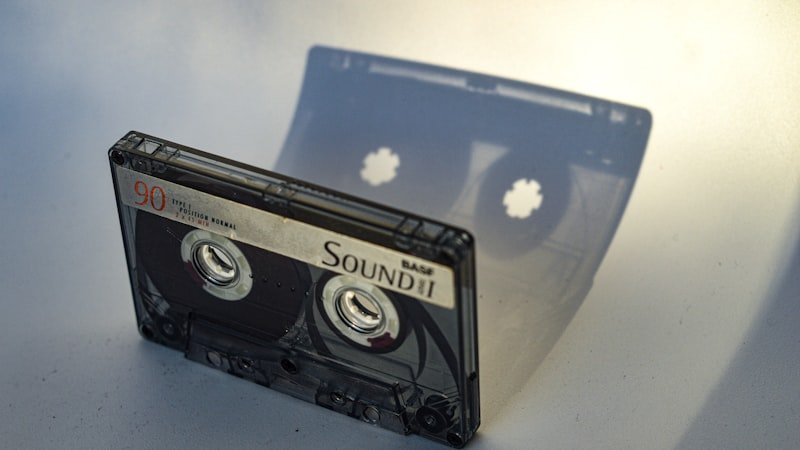
Making a mix tape was a labor of love. Here's how it worked, for anyone born after 1995:
- You needed a blank cassette tape, a stereo with a dual-cassette deck (or a CD-to-tape setup), and a vision.
- You chose each song deliberately. Not just because you liked it, but because of what it said. The order mattered. The transitions mattered. The total runtime mattered — you had exactly 45 or 60 minutes per side.
- You pressed play and record simultaneously and waited in real time for each song to finish. No skipping ahead. No drag and drop.
- If you messed up — started recording too late, let dead air slip in, or realized the song didn't fit the mood — you rewound and started over.
- When it was done, you wrote the track listing by hand on the little insert card. Maybe you decorated it. Maybe you agonized over the title.
The whole process could take an entire afternoon. And that was the magic.
Why Mix Tapes Were Special
A mix tape communicated things that words couldn't quite capture:
- "I was thinking about you." You spent hours on this. That means something.
- "Listen to this." Every song was a recommendation, a piece of your identity you were sharing.
- "I feel this way." A carefully sequenced mix tape could tell a story — first love, heartbreak, friendship, rebellion — without a single spoken word.
As author Nick Hornby wrote in High Fidelity: "A good compilation tape, like breaking up, is hard to do. You've got to kick off with a corker, to hold the attention, and then you've got to up it a notch..."
Playlists Are Not the Same
Yes, you can make a playlist on Spotify. You can even share it. But it's not the same, and here's why:
- No physical object. A mix tape was something you could hold. It had weight, texture, and a handwritten label. A playlist is just a URL.
- No constraint. With unlimited songs and no time limit, there's no curation pressure. A 200-song playlist isn't a statement — it's a dump.
- No effort barrier. The difficulty of making a mix tape was what gave it value. Easy things don't carry the same emotional weight.
- No imperfections. The slight tape hiss, the awkward fade between songs, the moment where you can hear someone breathing before hitting stop — those artifacts were part of the charm.
The Legacy
The mix tape wasn't just a way to share music. It was a communication tool, a creative exercise, and an act of generosity all rolled into one. It said: "I know you well enough to choose these songs, and I care about you enough to spend my afternoon doing it."
In a world of instant everything, maybe we need more things that take an entire afternoon.