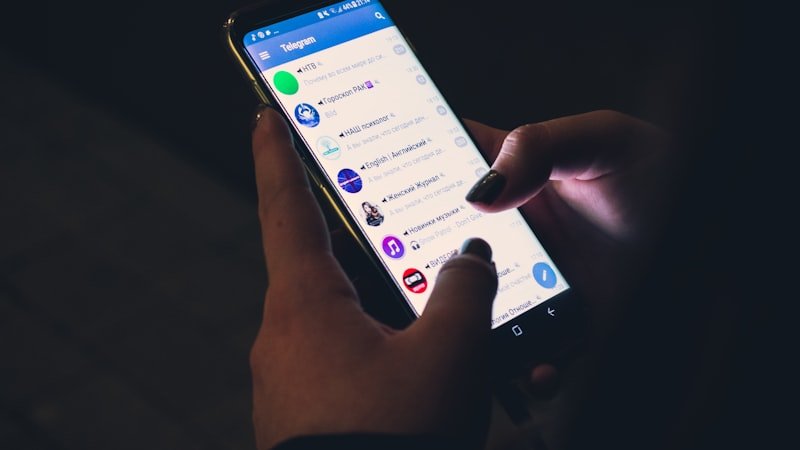

When was the last time you were bored? Not "waiting for something" bored. Not "scrolling because nothing good is on" bored. Truly, deeply, stare-at-the-ceiling bored.
If you have a smartphone, the answer is probably: years ago.
The Extinction of Empty Time
We've done something remarkable in the last two decades. We've eliminated boredom almost entirely. Every waiting room has WiFi. Every commute has a podcast. Every bathroom break has Instagram. Every idle second can be filled with content, communication, or consumption.
On paper, this sounds like progress. Who would choose to be bored? But scientists, psychologists, and creators are starting to wonder: what did we lose when we killed boredom?
Boredom Was a Creative Engine
Research from the University of Central Lancashire found that bored people are significantly more creative than their stimulated counterparts. When your brain has nothing to process, it starts to wander — and wandering is where ideas come from.
Think about it: some of the greatest ideas in history came from idle moments.
- Newton watched an apple fall because he was sitting under a tree with nothing to do.
- J.K. Rowling conceived Harry Potter during a delayed train journey.
- Archimedes had his "Eureka" moment in the bath.
These weren't moments of focused productivity. They were moments of mental emptiness that allowed something new to emerge.
The Default Mode Network
Neuroscientists have identified something called the Default Mode Network (DMN) — a network of brain regions that activates when you're not focused on anything specific. It's your brain on idle, and it's far from lazy.
The DMN is responsible for:
- Self-reflection: Understanding who you are and what you want.
- Future planning: Imagining scenarios and possibilities.
- Creative thinking: Making unexpected connections between ideas.
- Empathy: Understanding other people's perspectives.
Every time you fill an idle moment with your phone, you're shutting down this network. You're choosing consumption over creation, input over insight.
What Kids Are Missing
For children, the loss is even more significant. Kids who grew up before smartphones had hours of unstructured time: lying in the grass, stacking rocks, inventing games with sticks. These weren't wasted hours. They were the foundation of imagination, problem-solving, and emotional resilience.
Today's kids rarely experience true boredom. And the early research suggests this might be affecting their creativity, attention spans, and ability to self-regulate emotions.
A Small Experiment
Try this: tomorrow, pick one moment you'd normally fill with your phone — a line at the coffee shop, a wait for the bus, the five minutes before a meeting — and just... don't. Don't pull out your phone. Don't listen to anything. Just exist.
It will feel uncomfortable. You might feel anxious. Your hand will reach for your pocket involuntarily. That discomfort is telling you something: you've forgotten how to be alone with your thoughts.
Boredom isn't the enemy. It's the quiet space where your best ideas are waiting to be found.