
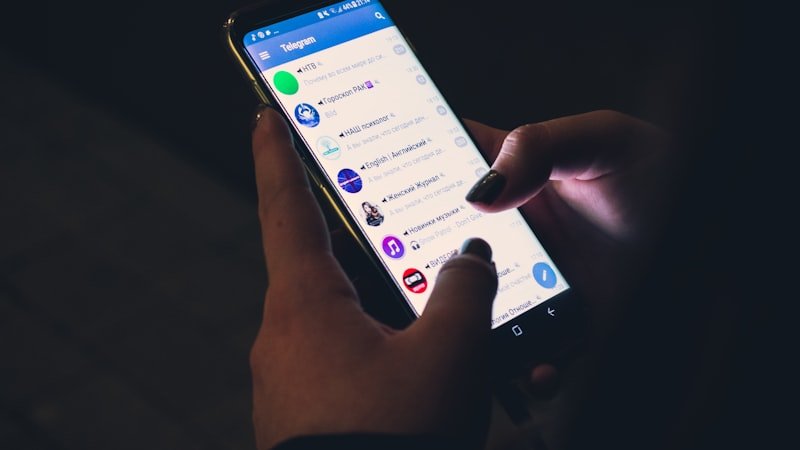
It's 11:47 PM. You told yourself you'd go to bed at 10. Your thumb keeps moving, pulling down to refresh, swiping to the next video, the next take, the next outrage. You're not enjoying it. You haven't been for an hour. But you can't stop.
This is doomscrolling. And your brain is doing something very specific while it happens.
The Dopamine Trap
Social media platforms are engineered around variable reward schedules — the same mechanism that makes slot machines addictive. You scroll past boring content, boring content, boring content, and then — something interesting. A hit. Your brain releases dopamine, not from the content itself, but from the unpredictability of finding it.
This is why you keep scrolling even when most of what you see is junk. Your brain is chasing the next random reward, just like a gambler chasing the next win.
What the Science Shows
Research published in the Proceedings of the National Academy of Sciences found that "concrete morphological alterations" occur in brains associated with intensive digital media use. In plain English: your brain physically changes shape based on how much you scroll.
Here's what the research tells us:
- Attention fragmentation. A University of California study found that the average attention span on a single screen dropped from 2.5 minutes in 2004 to 47 seconds by 2023. Heavy social media users perform worse on sustained attention tasks.
- Emotional blunting. Continuous exposure to outrage, tragedy, and conflict creates a desensitization effect. You feel less in response to real-world events because your emotional baseline has been recalibrated by a constant feed of extreme content.
- Sleep disruption. Blue light is part of it, but the bigger factor is cognitive arousal. Your brain is still processing content long after you put the phone down, making it harder to fall asleep and reducing sleep quality.
- Social comparison spiraling. Instagram and TikTok create what psychologists call "upward social comparison" — you're constantly measuring yourself against curated highlights of other people's lives. The result is a persistent, low-grade sense of inadequacy.
The Scale of the Problem
According to DemandSage, approximately 210 million people worldwide struggle with social media addiction. A 2024 Reviews.org survey found that 43% of Americans admit they feel addicted to their phones.
Oxford Dictionary named "brain rot" its 2025 Word of the Year, defined as "the supposed deterioration of a person's mental or intellectual state, especially as a result of overconsumption of content." The fact that a slang term coined by teenagers became the dictionary's word of the year tells you how mainstream the concern has become.
The Detox Paradox
A landmark study published in JAMA Network Open in November 2025 tracked 373 young adults through a one-week social media detox. The results were striking:
- 16% reduction in anxiety
- 24% decrease in depression
- 14.5% decrease in insomnia
But here's the catch: the benefits disappeared within 2-3 days of returning to social media. And 51% of people who take social media breaks eventually return to their previous usage levels.
The problem isn't willpower. It's that the platforms are designed by thousands of engineers whose explicit job is to keep you engaged. You're not failing to resist — you're facing a system built to overcome your resistance.
Breaking the Loop
Complete abstinence isn't realistic for most people. But research suggests these interventions actually work:
- Remove the infinite scroll. Browser extensions and app settings can add friction back into the experience. When the feed has an end, your brain gets a natural stopping point.
- Set physical boundaries. Charge your phone outside the bedroom. Use a physical alarm clock. Create phone-free zones (dining table, bathroom).
- Replace, don't just remove. The urge to scroll fills a need — usually boredom or anxiety. Give your hands and brain something else: a book, a sketchpad, a short walk.
- Schedule your scrolling. Paradoxically, allowing yourself 20 minutes of dedicated scroll time is more effective than trying to quit cold turkey. It turns an unconscious habit into a conscious choice.
The Bigger Picture
Doomscrolling isn't a character flaw. It's the predictable result of putting supercomputers optimized for engagement into the pockets of mammals who evolved to seek novelty and avoid threats.
Understanding that doesn't make it easier to stop. But it does shift the blame from "I have no self-control" to "I'm fighting a system designed to exploit my neurology." And that reframe, for many people, is the first step toward scrolling less.